

Distracted Flying
Pilots and air traffic controllers are just as susceptible to distractions while flying or directing flight traffic as people are when driving vehicles. But distractions on a plane or the control tower can create consequences even more dramatic than those on the road. The National Transportation Safety Board (NTSB) has reported many instances of cell phone usage causing distracted flying accidents including a “… bantering personal phone call about a dead cat while directing traffic.” The NTSB report noted that during the time the controller was on the phone, he made several errors. For example, after he made the handoff of the Piper to Newark tower for flight following, he failed to provide the pilot the new frequency for two minutes. When he finally did call with the new frequency, he spoke very quickly; the pilot then read back an incorrect frequency to the controller, but the controller did not notice the error. Because the pilot was on the wrong frequency, no one could warn him about the approaching collision.
Read More
Should I Worry About Distracted Boating?
There is a long history of boaters not taking distracted boating on the water as seriously as they take distracted driving. There are distressing indications that boat drivers are increasingly using cell phones and other electronic devices while operating their vessels, creating distracted boating situations that are leading to an increase in boating accidents and injuries.
Why is it that we don’t hear as much about distracted boating as we do distracted driving? The facts about distracted boating need to be shared with the public.
Read More
Daycare Accidents
Many parents and guardians trust daycares to keep their children safe from harm while they are at work; the reality is that daycare accidents do happen. Curious, active children can easily end up breaking a bone, getting a concussion or simple cuts and bruises. When a child is injured badly enough that a trip to the hospital or doctor is warranted, the family may be left wondering who is responsible for the bill. Certainly some accidents are unavoidable but many more could be prevented if daycare employees were more consistently vigilant in following safety guidelines, eliminating hazards and supervising closely.
Read More
Top Winter Hiking Safety Tips
Hikes range in length and intensity but even a day hike can turn into an overnight when an unexpected event occurs such as an avalanche or simply taking a wrong turn. A smart hiker is always prepared, especially when undertaking a winter hike. Hiking safety tips are especially important when winter hiking because daylight hours are short and there is a risk of hypothermia.
(more…)
Read More
The Hands Free Cell Phone Causes Danger on Roads
A study released by the AAA Foundation in 2008, revealed that two-thirds of Americans who use cell phones to communicate while driving believe that it is safer to talk on a hands free cell phone than on a hand-held device. The data shows that talking on hands-free devices almost equally impairs reaction times and increases the driver’s risk of being in a car accident as much as for a driver using a hand-held device, according to a study conducted by VTTI. With cell phone usage increasing the risk of a car accident by four times; this is a troubling finding. The reality is that it takes up to 27 seconds to regain full attention after issuing voice commands and even after the driver ends the call, he continues to be distracted for another 15 seconds (while driving at 25mph). Many researchers believe that this is due to, “withdrawal of attention from the processing of information in the driving environment” while speaking on a cell phone. The concept is also referred to as “inattentional blindness” or “perceptual blindness” in psychological literature which describes a situation where a person will fail to see an unexpected stimulus, such as a pedestrian stepping out into the road, because they are focusing their attention on a different task, in this case, talking on a cell phone. Simons & Chabris released a review of these experiments in 1999.
Read More
Can I Recover Damages for a Skiing Accident?
The Pacific Northwest is home to some of the world’s best skiing mountains making it a popular local sport. There is no doubt, however, that the sport carries a high risk for personal injury. Skiers may sign a waiver that they are risking a skiing accident without the ability to sue but if you were injured by another skier or snowboarder, or by a ski area operator; you may be entitled to recover damages for your injuries.
Many skiing injuries are the result of collisions with other skiers or riders, chairlift accidents, or other ski area operator negligence. Ski area operator negligence can involve issues such as heavy machinery operation mistakes or malfunctions, in-area avalanches, or improperly marked boundaries.
Read More
Sauna Safety Tips
Spending time in a sauna is a relatively safe and, many would argue, a health-promoting activity. The world was shocked in August, 2010 when a man died in that year’s World Sauna Championships in Finland. There were more than 100 participants in the championship, which was setup in 1999 to celebrate a tradition that goes back hundreds or possibly thousands of years. The deadly accident served to highlight the fact that saunas should only be used in moderation as the human body can only take so much heat. There is also little scientific evidence to support the health benefits of saunas outside of relaxation and questions remain about what even moderate sauna use might do to our bodies.
How the Human Body Responds to Saunas
Read More
Protect Your Kids from a Furniture Tip-Over Accident
In an effort to curb childhood deaths and injuries from tip-over accidents, in June 2015, The U.S. Consumer Product Safety Commission (CPSC) launched a national public education campaign called “Anchor It!”. Tip-over accidents from TVs and other furniture are one of the top hidden hazards in the home. Parents should try to look at their decor through the eyes of a curious, exploring toddler who may be tempted to climb on furniture like a jungle gym.
Read More
Airplane Safety Tips for your Child
The Federal Aviation Administration (FAA) strongly recommends that parents keep their infants and toddlers strapped into a government-approved child safety restraint system (CRS) or device. It is not certain that a parent can hold an infant securely in their arms throughout a flight, especially during unexpected turbulence. It can also be difficult to keep toddlers in their seats using only the plane’s lap belt.
Airplane Safety Tips: How to Choose a CRS
Read More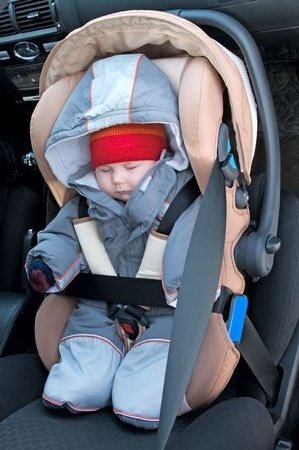
The Danger of Winter Coats: Car Seat Safety
According to the National Highway Traffic Safety Administration, more than 46 percent of children ride in car seats that are incorrectly installed in such ways that crash protection is reduced. One of the most common forms of poor car seat installation and use is loose harness straps.
In Bellingham winters, most days are cold enough to warrant the use of a warm jacket and it is only reasonable that parents would want to bundle their kids up. Many parents then loosen car seat straps to fit around the bulk of the winter coat. Unfortunately, the space created between the coat and your child’s frame is a dangerous risk for your children. If a car accident occurs at about 30 miles per hour or higher, the coat may compress but the straps will stay in place thereby leaving a gap that could cause the child to be tossed around or even ejected from the seat.
Read More